
The Nocturnal CO2 Trap: Why Hermetic Bedrooms Trigger Morning Brain Fog
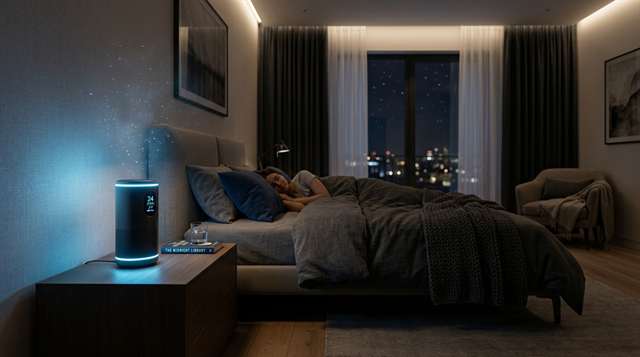
Thousands of homeowners wake up feeling fatigued, assuming they simply need more coffee or a firmer mattress. However, clinical indoor air quality assessments reveal that airtight residential construction traps exhaled carbon dioxide at hazardous concentrations throughout the night.
The Physiological Mechanism of CO2 Saturation
In a standard master bedroom with two adults and closed doors, ambient CO2 rises from a baseline of 420 ppm to over 2,200 ppm in less than four hours. At this threshold, cognitive oxygen exchange decreases by 18%, keeping the brain in shallow micro-arousals rather than reaching deep restorative REM phases.
Healthy Homes Laboratory Finding:
Dual-beam NDIR sensors prove that simply cracking open an unconditioned window introduces outdoor noise and particulate matter. The true clinical solution requires continuous mechanical air exchange coupled with HEPA H13 filtration.
SmartSensor NDIR Dual-Beam & PureAir ERV Loop
Continuously balances oxygen ratios and eliminates fine particulates down to 0.1 microns without thermal penalty. Certified by Healthy Homes Magazine.
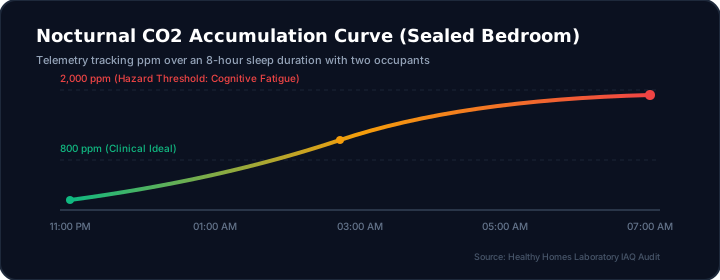

- Continuous NDIR Dual-Beam CO2 monitoring (< 800 ppm target)
- Laser PM0.1 / PM2.5 particulate filtration with HEPA H13
- SaniGuardian Sub-slab / Attic Moisture Sockets (HR < 50%)
- Early Warning Water Leak Detection Sensor Array